
Description
We restore degraded landscapes using native tree and plant species
adapted to the ecological conditions of the Democratic Republic of
Congo. Our restoration programmes are designed to recover damaged
ecosystems, protect vital watersheds, improve soil stability and
increase biodiversity.
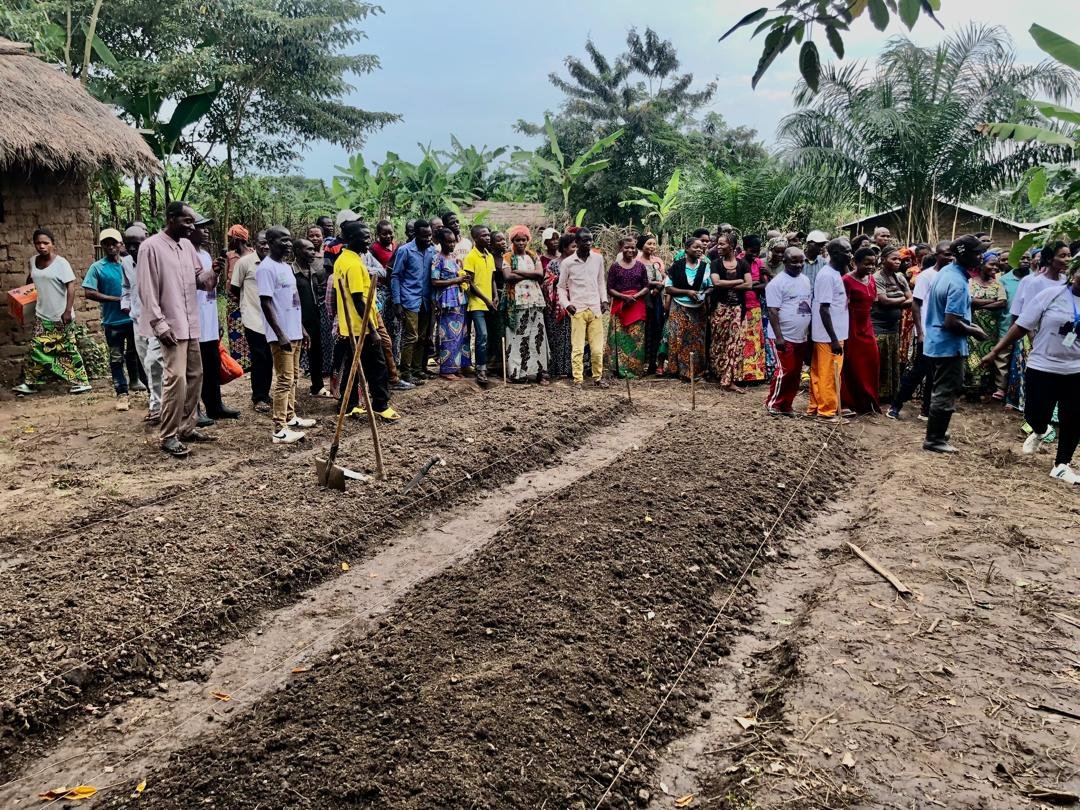
Working with local communities, farmers, landowners and conservation
partners, we identify priority restoration areas and develop
site-specific rehabilitation plans. These plans consider soil
conditions, water availability, existing vegetation, local livelihoods
and the ecological importance of each landscape.
Our approach goes beyond planting trees. It supports the long-term
recovery of forests and ecosystems through native-species selection,
community nurseries, assisted natural regeneration, erosion control,
agroforestry and continuous monitoring. This ensures that restored
areas can survive, regenerate and provide lasting environmental and
social benefits.
Restored landscapes help protect rivers and water sources, reduce soil
erosion, improve groundwater recharge and create habitats for wildlife.
They also strengthen community resilience by supporting sustainable
agriculture, forest-based livelihoods and climate adaptation.
Outcomes and Environmental Impact
Our restoration activities have rehabilitated approximately
83,000 hectares using native species from the
Democratic Republic of Congo.
These interventions contribute to the recovery of degraded ecosystems,
improved watershed protection, increased biodiversity, enhanced soil
fertility and greater climate resilience. They also support long-term
carbon sequestration and help reduce pressure on remaining natural
forests.
Our Offerings
-
Landscape Assessment and Restoration Planning:
Evaluation of degraded areas, soil conditions, water systems,
biodiversity and community needs to develop appropriate
restoration strategies. -
Native-Species Selection:
Identification of indigenous trees, shrubs and grasses suitable
for local ecosystems, climate conditions and restoration
objectives. -
Community Tree Nurseries:
Establishment and support of local nurseries that produce
high-quality native seedlings while creating employment and
income opportunities. -
Reforestation and Enrichment Planting:
Planting of native species in deforested and degraded areas to
restore forest cover, improve ecosystem structure and increase
biodiversity. -
Assisted Natural Regeneration:
Protection and management of naturally regenerating trees and
vegetation to accelerate ecological recovery at a lower cost. -
Watershed Protection:
Restoration of riverbanks, wetlands, hillsides and water catchment
areas to reduce erosion, control sedimentation and protect water
quality. -
Agroforestry and Sustainable Land Management:
Integration of native trees into farms and community landscapes
to improve soil health, diversify livelihoods and reduce pressure
on natural forests. -
Biodiversity Conservation:
Recovery and protection of habitats that support native plants,
wildlife, pollinators and other essential ecosystem species. -
Community Training and Participation:
Practical training for communities, farmers and local
organisations in nursery management, planting, maintenance, fire
prevention and sustainable resource use. -
Monitoring and Maintenance:
Long-term tracking of seedling survival, vegetation recovery,
biodiversity, soil stability and watershed conditions to ensure
lasting restoration results.