
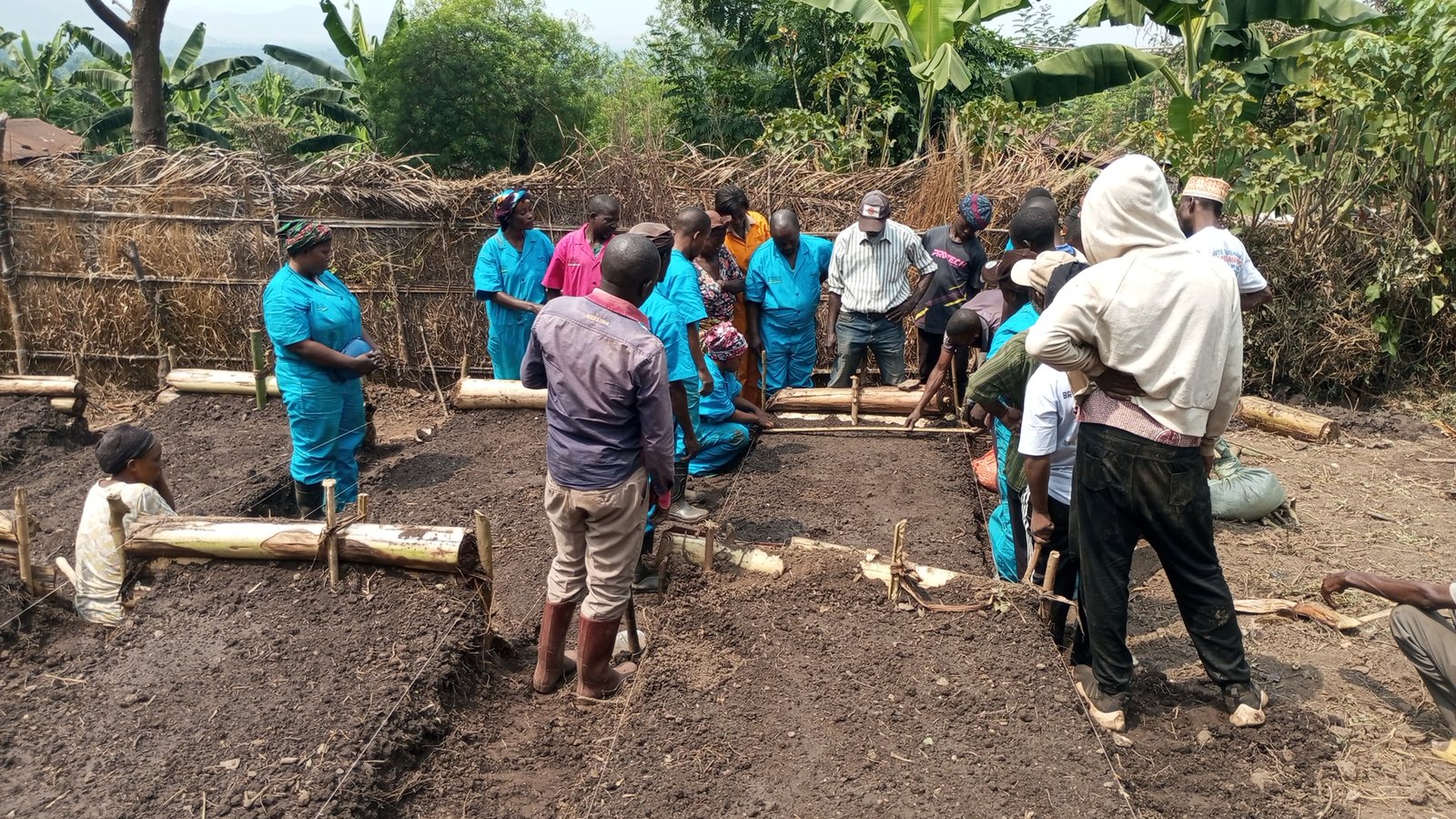
Description
We provide practical training and hands-on demonstrations to help
farmers improve soil health, increase agricultural productivity and
restore degraded land.
Our approach combines permaculture, agroforestry and climate-smart
agricultural practices adapted to local conditions. Farmers learn how
to conserve soil and water, improve soil fertility, reduce dependence
on expensive chemical inputs and develop farming systems that remain
productive despite droughts, floods and changing weather conditions.
Outcomes
Supported farmers have achieved an average yield increase of
approximately 150% through improved soil management,
better-quality seeds, organic fertilization and climate-resilient
production methods.
These practices also help restore soil fertility, reduce erosion,
improve water retention, diversify farm income and strengthen
long-term food security.
Our Offerings
- Farmer Field Schools:
Practical, season-long learning programmes where farmers test
improved techniques on demonstration plots, exchange knowledge
and receive guidance throughout the production cycle. - Seed Systems Support:
Assistance in accessing, selecting, producing and preserving
high-quality, locally adapted and climate-resilient seeds. - Compost and Bio-fertilizer Training:
Hands-on instruction in producing and applying compost, organic
manure, bio-fertilizers and other natural soil amendments using
locally available materials. - Soil Health Management:
Training in soil assessment, crop rotation, cover cropping,
mulching, erosion control and responsible nutrient management. - Permaculture:
Support in designing diversified farming systems that recycle
resources, conserve water and maintain productivity with fewer
external inputs. - Agroforestry:
Guidance on integrating suitable trees with crops and livestock
to restore degraded land, protect soil, improve microclimates and
generate additional products. - Climate-Smart Agriculture:
Training in water-efficient irrigation, drought-resistant crops,
integrated pest management and farming practices adapted to
climate-related risks. - Demonstration Plots and Technical Follow-up:
Establishment of model farms where farmers can observe results,
practise new methods and receive ongoing technical support.