
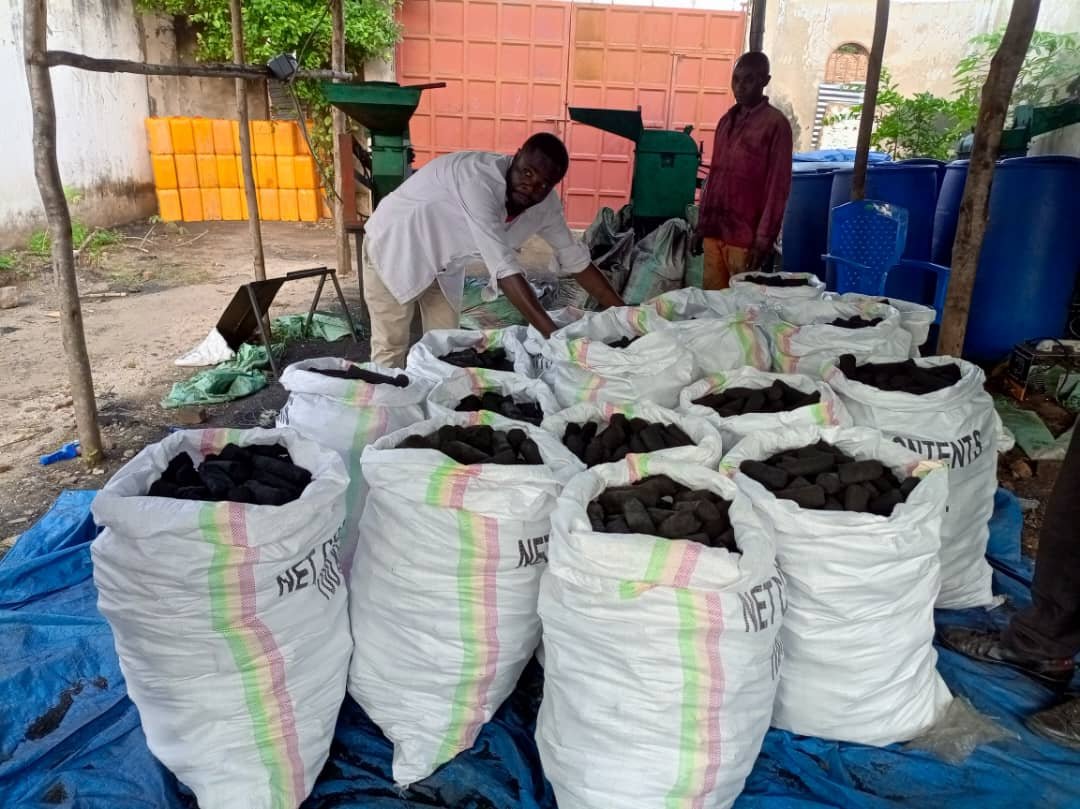
Description
We transform agricultural residues and other organic waste into
high-quality biochar and nutrient-rich soil amendments. This approach
prevents valuable biomass from being openly burned, dumped or left to
decompose while creating useful products for farmers, communities and
agricultural businesses.
Biochar is produced through the controlled heating of organic
materials in a low-oxygen environment. This process stores carbon in a
stable form that can remain in the soil for long periods, helping
remove carbon from the atmosphere and reduce greenhouse-gas emissions.
When applied to farmland, biochar can improve soil structure, increase
water and nutrient retention, support beneficial soil microorganisms
and reduce nutrient loss. It is particularly valuable for restoring
degraded and low-fertility soils affected by erosion, drought,
intensive cultivation or declining organic matter.
The programme promotes a circular agricultural economy by converting
crop residues into marketable products instead of treating them as
waste. Farmers and local enterprises can benefit from new income
opportunities through biomass collection, biochar production,
distribution and the sale of biochar-based soil amendments.
Outputs and Climate Impact
Our biochar and carbon-sequestration activities have produced
approximately 78,000 tonnes of biochar and contributed
to an estimated reduction of 93,009 tonnes of CO₂ emissions.
These results demonstrate how agricultural waste can be converted into
a practical climate solution that restores soil productivity, reduces
emissions and supports the development of sustainable rural
businesses.
Our Offerings
-
Agricultural Residue Collection:
Organisation of systems for collecting crop residues, pruning
waste, husks, stalks, shells and other suitable biomass from farms
and processing facilities. -
Biochar Production:
Establishment and operation of efficient biochar-production
systems adapted to local feedstocks, production capacity and
environmental conditions. -
Biochar-Based Soil Amendments:
Development of nutrient-rich products that combine biochar with
compost, manure or other organic materials to improve soil
fertility and crop productivity. -
Soil Restoration:
Application of biochar to degraded, acidic or nutrient-poor soils
to improve structure, water retention, nutrient availability and
long-term productivity. -
Carbon Sequestration:
Use of biochar to store atmospheric carbon in a stable form while
reducing emissions associated with the burning or uncontrolled
decomposition of agricultural residues. -
Farmer and Producer Training:
Practical instruction on biomass selection, safe biochar
production, product preparation, application rates and responsible
soil management. -
Enterprise Development:
Support for cooperatives, youth groups and local businesses to
produce, package, market and sell biochar and related soil
products. -
Carbon Monitoring and Verification:
Measurement and documentation of biomass use, biochar production,
carbon content, soil application and estimated greenhouse-gas
reductions.